Professional Associations

Joining professional organizations is part of the craft of judging. These organizations place you in sustained conversation with peers who face the same ethical pressures, institutional challenges, and decision-making demands that come with life on the bench. Through education, conferences, committees, and informal networks, you gain access to evolving best practices, candid peer insight, and a broader perspective that no single courthouse can provide. Just as importantly, professional organizations reinforce judicial independence and professionalism by reminding you that judging is not a solitary endeavor, but a shared public trust. When you participate, you sharpen your skills, strengthen the institution, and signal that you are committed to continual growth, accountability, and leadership within the judiciary.

(association descriptions are from their web sites, click on name to open in new window)

American Bar Association Judicial Division

The Judicial Division is dedicated to improving the American judicial system and encouraging all members of the judiciary, lawyers, and others who share a strong interest in this goal to work toward this common objective.

American Inns of Court

The American Inns of Court inspire the legal community to advance the rule of law by achieving the highest level of professionalism through example, education, and mentoring.

American Judges Association

The American Judges Association (AJA) is one of the largest, most diverse, independent organizations in North America made up exclusively of judges. Administratively housed in the National Center for State Courts, AJA is run by judges, for judges. We are the “Voice of the Judiciary.”® Member judges represent all levels of courts — trial, appellate, criminal, civil, administrative, and special jurisdiction — in state, municipal, provincial, federal and tribal courts.

Association of Administrative Law Judges

The Association of Administrative Law Judges is both a labor union and a professional organization that represents more than 1,000 federal administrative law judges engaged in adjudication at the Social Security Administration. The SSA’s judiciary forms the largest adjudicative body in the western world. Each year, the SSA’s administrative law judges hold hundreds of thousands of hearings. More Americans will appear before an SSA administrative law judge than in any other judicial forum. Yet the procedures and issues related to SSA hearings are not widely understood because they are closed to the public to protect the privacy rights of claimants. Some even refer to these courts as “the hidden judiciary.”

Federal Administrative Law Judges Conference

The Federal Administrative Law Judges Conference (FALJC) is a voluntary professional association, organized over 60 years ago for the purpose of improving the administrative judicial process, presenting educational programs to enhance the judicial skills of Administrative Law Judges, and representing the concerns of Federal Administrative Law Judges in matters affecting the administrative judiciary. Membership in the Conference is open to judges from every administrative agency that employs Administrative Law Judges. FALJC sponsors educational and social programs for its members, and from time to time speaks out on behalf of its members on issues relating to the administrative judicial process and issues of concern to our members regarding our status as employees of the United States. Among the educational programs sponsored by the Conference is an annual three-day seminar at which speakers from the judiciary, academia, and the private practice of law speak on a variety of topics related to administrative law and trial practice.

Federal Bar Association Judiciary Division

The purpose of the Federal Bar Association’s Judiciary Division is to improve the administration of justice, including, but not limited to representing the interests of Division members stimulating the interest of others in the work of the Division and the Association, conducting educational programs and activities, and assisting the Association and its chapters in the work of the Association.

Federal Judges Association

The Federal Judges Association (FJA) is a national voluntary organization of United States federal judges, appointed pursuant to Article III of the Constitution, whose mission is to support and enhance the role of its members within a fair, impartial and independent judiciary; to actively build a community of interest among its members; and to sustain our system of justice through civics education and public outreach.

National American Indian Court Judges Association

NAICJA is a national association comprised of tribal justice personnel & others devoted to supporting and strengthening tribal justice systems through education, information sharing, and advocacy. NAICJA is a non-profit corporation established in 1969 as a corporation in the state of Delaware following the enactment of the federal Indian Civil Rights Act of 1968. The Act required tribes to follow certain requirements similar to those in the Bill of Rights in the U.S. Constitution. Tribal courts are the forums where those rights are enforced. NAICJA’s early goal was to provide education to tribal judges so that they could conduct proceedings in compliance with ICRA. As a national representative membership organization, NAICJA ‘s mission is to strengthen and enhance tribal justice systems.

National Association of Administrative Law Judiciary

The National Association of Administrative Law Judiciary (NAALJ) is the largest professional organization devoted exclusively to administrative adjudication devoted to the executive branch of government. It is a non-profit corporation founded in 1974 in the state of Illinois. Its voting members include: state, federal, and local administrative law judges, administrative judges, hearing officers, referees, trial examiners, agency chairs and commissioners, as well as higher appellate authorities, exercising a wide variety of subject matter jurisdiction. Associate members include law professors and attorneys involved in administrative law. As of  July 1, 2014, NAALJ had approximately 846 dues-paying members.

National Association of Hearing Officials

The National Association of Hearing Officials, Inc., is a professional nonprofit organization formed in 1987 comprised of individuals involved in the process of administrative adjudication. The twelve-member Board of Directors is elected by NAHO’s membership and represents all sections of the country and a variety of administrative jurisdictions. The mission of the National Association of Hearing Officials is to improve the fairness and effectiveness of the administrative hearing process, thus benefiting hearing officials, their employing agencies, and the individuals those agencies serve.

National Association of Immigration Judges

The National Association of Immigration Judges (NAIJ) is a voluntary organization of United States Immigration Judges. Our mission is to promote independence and enhance the professionalism, dignity, and efficiency of the Immigration Courts, which are the trial-level tribunals where removal proceedings initiated by the Department of Homeland Security are conducted. We work to improve our court system through educating the public, legal community and media, testimony at congressional oversight hearings, and advocating and lobbying for immigration court reform.

National Association of Women Judges

Since its formation in 1979, the National Association of Women Judges (NAWJ) has inspired and led the American judiciary in achieving fairness and equality for vulnerable populations. NAWJ’s mission is to promote the judicial role of protecting the rights of individuals under the rule of law through strong, committed, diverse judicial leadership; fairness and equality in the courts; and equal access to justice.

National Council of Juvenile and Family Court Judges

One of the largest and oldest judicial membership organizations in the nation, the NCJFCJ serves an estimated 30,000 professionals in the juvenile and family justice system including judges, referees, commissioners, court masters and administrators, social and mental health workers, police, and probation officers.

National Judges Association

The mission of the National Judges Association encompasses these goals: (a) To become a united voice for all non-attorney judges in the American court system; (b) To establish criteria and coordinate programs that will meet the needs of the individual judge and improve the entire judiciary by offering continuing education to all judges; (c) To improve public opinion regarding the American judiciary and secure a continuing place within our justice system for the non-attorney judge; (d) To educate the public to the essential and traditional role of the lay judge in our judicial system by providing information and material to remind and inform the public; (e) To promote the concept that the laws that bind us should be comprehensible to a majority of the people; (f) To provide a forum for the exchange of ideas, methods and experiences by providing opportunities for fellowship and personal contact with judicial officers from all parts of the nation. 

Get the Bench Book!

the essential guide for judges

Remember:
For your library . . .
Blindspot: Hidden Biases of Good People
The Book of Judges: Perspectives from the Bench
Race on the Brain: What Implicit Bias Gets Wrong About the Struggle for Racial Justice
Writing Deskbook for Administrative Judges: An Introduction
My Own Words
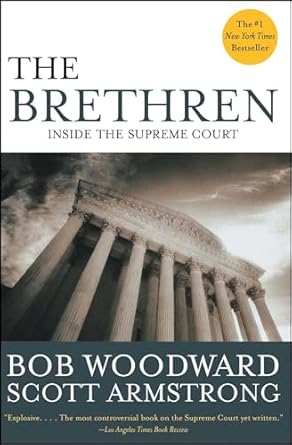
The Brethren: Inside the Supreme Court
A Matter of Interpretation: Federal Courts and the Law
Law’s Empire
The Least Dangerous Branch
Law of Judicial Precedent
An Introduction to Implicit Bias
How Judges Decide Cases: Reading Writing
Point Taken: How to Write Like the World’s Best Judges
The Authority of Law
The Behavior of Federal Judges
Biased: Uncovering the Hidden Prejudice That Shapes What We See, Think, and Do
Listening to the Law: Reflections on the Court and Constitution
Opinion Writing (3rd ed.)
A Judge’s Advice: 50 Years on the Bench
Sentencing the Self-Convicted: The Ethics of Pleading Guilty
Judicial Character in Hard Times: On the Role of Judicial Virtues in Defending the Rule of Law
The Elements of Legal Style (2nd ed.)
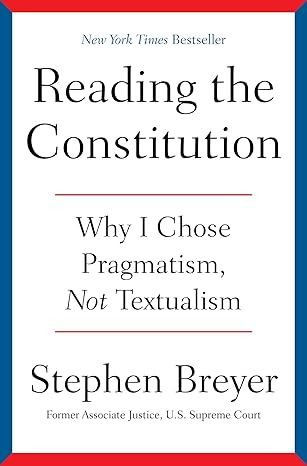
Reading the Constitution: Why I Chose Pragmatism, Not Textualism
Noise: A Flaw in Human Judgment
The Path of the Law
So Ordered: The Writer’s Guide for Aspiring Judges, Judicial Clerks, and Interns
Making Your Case: The Art of Persuading Judges
Scalia Speaks: Reflections on Law, Faith, and Life Well Lived
The Supreme Guide to Writing
Who Am I to Judge?: Judicial Craft versus Constitutional Theory
The Great Dissenter: The Story of John Marshall Harlan, America’s Judicial Hero
The Federalist Papers
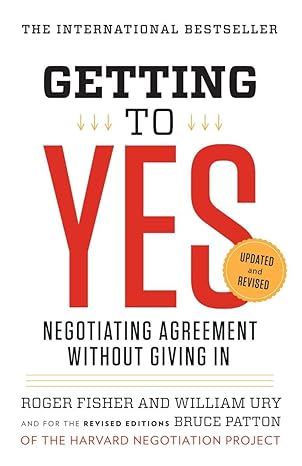
Getting to Yes: Negotiating Agreement Without Giving In
Democracy and Distrust
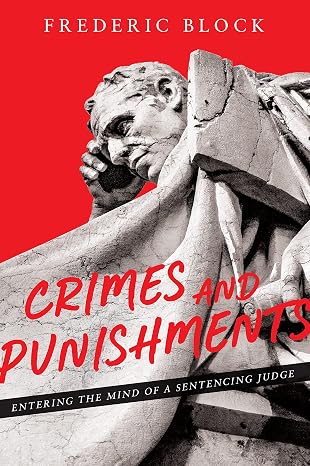
Crimes and Punishments: Entering the Mind of a Sentencing Judge
Judging Statutes
Judicial Decision-Making: A Coursebook
The Nature of the Judicial Process
The Supreme Court and the Attitudinal Model Revisited
Weapons of Math Destruction
Over Ruled: The Human Toll of Too Much Law
Reading Law: The Interpretation of Legal Texts
Legal Writing: A Judge’s Perspective on the Science and Rhetoric of the Written Word
The Death of Common Sense: How Law Is Suffocating America
Implicit Racial Bias across the Law
The Judge in a Democracy
Disrobed: An Inside Look at the Life and Work of a Federal Trial Judge
The Rule of Law
Thinking, Fast and Slow
On Writing Well
Point Made: How to Write Like the Nation’s Top Advocates (2nd ed.)
Thinking Like a Lawyer
Rights Reign Supreme: An Intellectual History of Judicial Review and the Supreme Court
Judicial Recusal: Principles, Process and Problems
The Gift of Fear
The Machinery of Criminal Justice
Rehabilitating Criminal Justice: Innovations in Policing, Adjudication, and Sentencing
Free to Judge: The Power of Campaign Money in Judicial Elections
Judicial Reputation: A Comparative Theory
Taking Rights Seriously
Sentencing without Guidelines
How Judges Think
Scroll to Top