experienced-judge-male

Experienced Judges

we'll help you refine and sustain over a judicial career

Lead With Consistency - Decide With Authority

Experience on the bench brings confidence—but it also brings complexity. As judicial roles deepen, expectations expand, and visibility increases, the work of judging becomes less about learning the mechanics and more about sustaining excellence over time.

Most experienced judges recognize this shift quietly.

  • They manage heavy dockets with efficiency, yet sense creeping strain.
  • They rule decisively, yet see patterns emerging in appeals, complaints, or courtroom dynamics.
  • They lead courts and courtrooms, yet carry institutional responsibilities that were never part of the original job description.

Judicial experience changes the nature of the work.

What once required learning now requires refinement, recalibration, and leadership.

Judicial consulting supports that evolution.

Our services are designed specifically for experienced judges who want to sharpen their practice, strengthen their leadership, and remain effective, credible, and resilient over the long arc of judicial service.

Grounded in Long-Term Judicial Practice

This work draws on decades of judicial experience—presiding over complex matters, managing demanding dockets, mentoring judges at all stages, and observing how strong judges sustain excellence over time.

  • We do not question independence.
  • We do not offer superficial productivity hacks.
  • We do not treat judging as a static skill set.

Instead, we help experienced judges:

  • Reassess decision-making patterns and reasoning frameworks
  • Refine judicial writing and clarity with an appellate perspective
  • Strengthen courtroom leadership and staff relationships
  • Navigate ethical complexity and heightened public scrutiny
  • Sustain effectiveness, balance, and professional longevity

The focus is not change for its own sake. It is deliberate refinement.

Who This Is For

Our judicial consulting services are designed for:

  • Judges with several years of experience on the bench
  • Judges managing complex, high-volume, or high-visibility dockets
  • Judicial leaders overseeing divisions, courts, or colleagues
  • Judges seeking recalibration, growth, or renewed clarity
  • Experienced judges committed to sustained excellence

If you view judging as a long-term professional calling—not a position you simply occupy—these services are designed for you.

A Long-View Approach to Judicial Excellence

The strongest judges are not defined by how they begin, but by how they evolve. Sustained judicial excellence requires reflection, discipline, and intentional leadership—especially as responsibilities expand.

Our Services for Experienced Judges

Chambers Workflow and Efficiency Review

Optimize how your chambers operates with a focused review that improves efficiency, clarity, and daily judicial workflow.

Judicial Coaching and Peer Support

Receive private, one-on-one judicial coaching designed to sharpen skills, support resilience, and enhance professional growth.

Judicial Security Consulting

Protect yourself and your family with expert guidance on judicial safety, personal security, and risk awareness.

Our Classes for Experienced Judges

Advanced Courtroom Control Techniques

To advance judges’ skills in de-escalating conflicts and managing disruptions, drawing from real-world examples to ensure effective and temperate courtroom oversight.

Applying Burdens and Standards to Fact-Finding

To help judges consciously weave burdens of proof and applicable standards into their fact-finding so that outcomes track the law’s requirements.

Avoiding Common Demeanor Pitfalls

To help judges recognize common demeanor mistakes and replace them with habits that protect dignity, neutrality, and public confidence.

Becoming and Remaining Proficient in Substantive Law

To provide judges with strategies for mastering and updating legal knowledge, ensuring informed and current adjudication in their jurisdiction.

Bench and Technology Preparation

To ensure judges’ readiness with bench organization and technology, including contingencies for reliable courtroom operations.

Best Practices for Courthouse Leadership

To guide judges in applying leadership principles to courthouse management, fostering ethical, communicative, and effective oversight of operations and staff.

Best Practices for Effective Courtroom Leadership

To provide judges with practical techniques for maintaining courtroom control and decorum, promoting respectful and efficient proceedings through balanced leadership.

Comprehensive Case Understanding and Planning

To develop judges’ skills in early case assessment and planning, facilitating structured and efficient case management.

Comprehensive Courtroom and Facility Preparation

To prepare judges for optimizing courtroom setups, coordinating with staff for safe and effective proceedings across case types.

Conducting Remote and Hybrid Hearings

To prepare judges to run remote and hybrid proceedings that are as orderly, fair, and accessible as well-conducted in-person hearings.

Crafting Clear and Thorough Findings of Fact

To strengthen judges’ ability to write findings of fact that are clear, logically organized, and sufficient for parties and reviewing courts to understand what was decided and why.

Credibility Determinations and Demeanor Assessment

To improve judges’ credibility assessments by integrating structured analysis, awareness of bias, and appropriate use of demeanor in evaluating testimony.

Cyber Security and Online Threat Management

To build judges’ capacity to protect themselves and their institutions from digital threats, harassment, and exposure of personal information.

Defining Scope and Developing a Hearing Roadmap

To assist judges in framing hearings and creating logical roadmaps, preparing for efficient and focused proceedings.

Developing a Personal Judicial Philosophy

To guide judges in articulating a grounded, self-aware judicial philosophy that can inform decisions without compromising impartiality or legal fidelity.

Effective Jury Selection (Voir Dire)

To strengthen judges’ ability to oversee voir dire in a way that uncovers bias, protects jurors, and produces a fair and impartial panel.

Effective Time Management and Event Scheduling

To teach judges practical scheduling techniques, ensuring efficient docket progression while adhering to statutory timelines.

Efficient Use of Time During Proceedings

To equip judges with strategies for using in-court time efficiently, minimizing downtime, and keeping proceedings on track without sacrificing fairness.

Fundamentals of Judicial Demeanor and Temperament

To ground judges in the core concepts of demeanor and temperament and to connect those concepts to daily choices on and off the bench.

Fundamentals of Judicial Security

To introduce judges to the core concepts and vocabulary of judicial security so they can recognize their own role within a broader security system.

Handling Objections and Making Rulings

To refine objection management, ensuring timely, reasoned rulings that support fair trials.

Hearing/Trial Scheduling, Continuances, and Case Closure

To guide judges in firm scheduling and closure practices, balancing efficiency with fairness in granting continuances.

Judicial Authority and Leadership in Technological Systems

To position judges as leaders in court technology adoption, evaluating benefits and challenges for improved access and efficiency.

Jurors as Essential Partners in Justice

To deepen judges’ appreciation of jurors as justice partners and to develop practices that respect their role while maintaining proper boundaries.

Leadership Through Community Engagement

To guide judges in appropriate community involvement, highlighting benefits and boundaries to enhance leadership while preserving judicial impartiality.

Managing Evidence Presentation and Jury Dynamics

To equip judges to coordinate evidence presentation with jury needs, managing pacing, breaks, and sidebars so that jurors can follow the story of the case.

Mastering Burdens of Proof and Production

To clarify the distinctions and applications of evidentiary burdens in legal proceedings, equipping judges to explain and apply them accurately.

Mastering Courtroom Players and Dynamics

To enable judges to understand and manage interactions among courtroom participants, ensuring ethical and fair proceedings for all involved.

Measuring and Improving Docket Performance

To introduce metrics for docket efficiency, empowering judges to audit and collaborate on improvements for better judicial performance.

Opening and Structuring Hearings Effectively

To help judges open and structure hearings in ways that communicate expectations, reduce anxiety, and set a tone of order and respect.

Practical Judicial Security at Work and Home

To provide judges with practical, everyday security habits for chambers, courthouse, home, and travel that reduce risk without paralyzing daily life.

Preliminary and Final Jury Instructions

To improve judges’ design and delivery of preliminary and final instructions so that jurors understand the law they are sworn to apply.

Preserving the Irreplaceable Human Element in Judging

To affirm the essential human aspects of judging amid technological advances, ensuring balanced integration that maintains trust and judgment.

Pretrial Matters in Jury Trials

To help judges manage pretrial issues in jury cases so that trials begin on time, with clear rulings and a well-shaped evidentiary record.

Preventing and Addressing Judicial Burnout

To equip judges with strategies for preventing, recognizing, and responding to burnout in ways that are realistic, ethical, and sustainable over a long judicial career.

Recognizing and Managing Judicial Stress

To help judges identify, normalize, and manage the unique stresses of judicial work before those stresses degrade judgment or health.

Security Preparation and Risk Assessment

To train judges in threat assessment and security protocols, balancing safety with public access to the courts.

Shifting Burdens and Enforcement in Practice

To prepare judges to handle dynamic burden shifts and enforce them fairly, promoting efficient and just courtroom decision-making.

The Judge as Leader in the Courthouse: Overview and Principles

To outline the judge’s leadership role in the courtroom, distinguishing operational and procedural aspects while addressing challenges that impact public perceptions of justice.

The Judge as Public Face of the Rule of Law

To emphasize the judge’s role in embodying the legal system, exploring ways to maintain public trust through conduct that balances independence and accountability.

The Universal Decisional Framework

To give judges a simple, repeatable framework for organizing their reasoning so that decisions are transparent, coherent, and easier to explain.

The Value and Impact of Appellate Review

To demystify appellate review for trial-level judges and show how to use appellate feedback as a constructive tool for improving practice.

Understanding and Applying Standards of Review

To define and differentiate appellate standards, enabling judges to make rulings that are informed by their potential for review and reversal.

Understanding and Managing Different Docket Types

To familiarize judges with various docket demands, aiding in prioritization and management to deliver timely justice.

Understanding Legal Issues and Preparing for Resolution

To deepen judges’ pre-proceeding comprehension of legal matters, readying them for decisive and well-prepared resolutions.

Understanding Your Courthouse Team

To equip judges with knowledge of courthouse team roles and functions, promoting collaborative relationships that enhance judicial efficiency and the administration of justice.

Books for Seasoned Judges

Get the Bench Book!

the essential guide for judges

Remember:
For your library . . .
The Authority of Law
Law’s Empire
The Path of the Law
Judicial Reputation: A Comparative Theory
Over Ruled: The Human Toll of Too Much Law
The Supreme Court and the Attitudinal Model Revisited
Sentencing without Guidelines
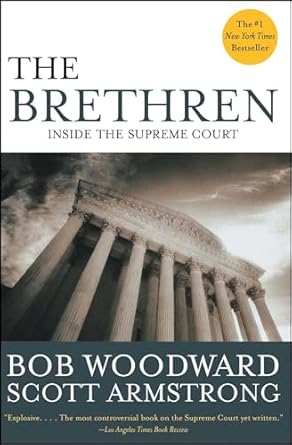
The Brethren: Inside the Supreme Court
Thinking, Fast and Slow
The Federalist Papers
The Book of Judges: Perspectives from the Bench
The Nature of the Judicial Process
Point Made: How to Write Like the Nation’s Top Advocates (2nd ed.)
Listening to the Law: Reflections on the Court and Constitution
Noise: A Flaw in Human Judgment
Making Your Case: The Art of Persuading Judges
Judging Statutes
My Own Words
Who Am I to Judge?: Judicial Craft versus Constitutional Theory
The Death of Common Sense: How Law Is Suffocating America
Biased: Uncovering the Hidden Prejudice That Shapes What We See, Think, and Do
Law of Judicial Precedent
Disrobed: An Inside Look at the Life and Work of a Federal Trial Judge
An Introduction to Implicit Bias
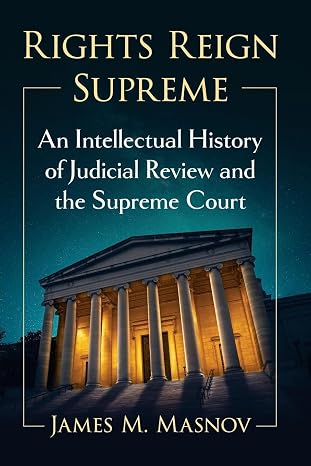
Rights Reign Supreme: An Intellectual History of Judicial Review and the Supreme Court
A Matter of Interpretation: Federal Courts and the Law
How Judges Decide Cases: Reading Writing
Judicial Recusal: Principles, Process and Problems
How Judges Think
Sentencing the Self-Convicted: The Ethics of Pleading Guilty
The Behavior of Federal Judges
Rehabilitating Criminal Justice: Innovations in Policing, Adjudication, and Sentencing
Point Taken: How to Write Like the World’s Best Judges
Thinking Like a Lawyer
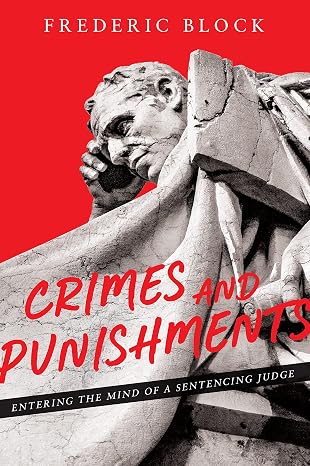
Crimes and Punishments: Entering the Mind of a Sentencing Judge
Weapons of Math Destruction
The Elements of Legal Style (2nd ed.)
The Machinery of Criminal Justice
On Writing Well
Taking Rights Seriously
A Judge’s Advice: 50 Years on the Bench
Reading Law: The Interpretation of Legal Texts
The Great Dissenter: The Story of John Marshall Harlan, America’s Judicial Hero
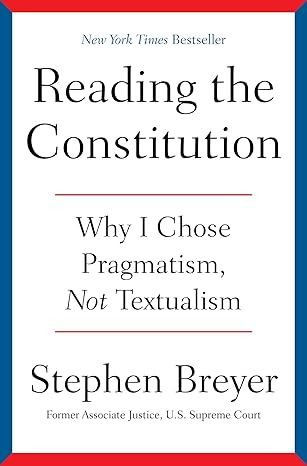
Reading the Constitution: Why I Chose Pragmatism, Not Textualism
Scalia Speaks: Reflections on Law, Faith, and Life Well Lived
Race on the Brain: What Implicit Bias Gets Wrong About the Struggle for Racial Justice
Implicit Racial Bias across the Law
Blindspot: Hidden Biases of Good People
Getting to Yes: Negotiating Agreement Without Giving In
So Ordered: The Writer’s Guide for Aspiring Judges, Judicial Clerks, and Interns
Legal Writing: A Judge’s Perspective on the Science and Rhetoric of the Written Word
The Least Dangerous Branch
Judicial Decision-Making: A Coursebook
Judicial Character in Hard Times: On the Role of Judicial Virtues in Defending the Rule of Law
The Supreme Guide to Writing
Writing Deskbook for Administrative Judges: An Introduction
Opinion Writing (3rd ed.)
Free to Judge: The Power of Campaign Money in Judicial Elections
The Gift of Fear
The Judge in a Democracy
The Rule of Law
Democracy and Distrust
Scroll to Top