D1-Reasoning

Reasoning

The ability to evaluate evidence, arguments, and the law to reach well-supported conclusions. It requires critical thinking, identifying relevant facts, applying legal principles, and ensuring rulings are coherent and grounded in precedent.

Bench Index Competency

Topic

Keynotes, Classes, and Services

Class
KJA - gavel only - changeable BG color

Applying Burdens and Standards to Fact-Finding

To help judges consciously weave burdens of proof and applicable standards into their fact-finding so that outcomes track the law’s requirements.

Class
KJA - gavel only - changeable BG color

Becoming and Remaining Proficient in Substantive Law

To provide judges with strategies for mastering and updating legal knowledge, ensuring informed and current adjudication in their jurisdiction.

Class
KJA - gavel only - changeable BG color

Crafting Clear and Thorough Findings of Fact

To strengthen judges’ ability to write findings of fact that are clear, logically organized, and sufficient for parties and reviewing courts to understand what was decided and why.

Class
KJA - gavel only - changeable BG color

Credibility Determinations and Demeanor Assessment

To improve judges’ credibility assessments by integrating structured analysis, awareness of bias, and appropriate use of demeanor in evaluating testimony.

Service
KJA - gavel only - changeable BG color

Curriculum Design for Judicial Education

Build impactful judicial education programs with expert curriculum design grounded in adult learning and bench experience.

Class
KJA - gavel only - changeable BG color

Developing a Personal Judicial Philosophy

To guide judges in articulating a grounded, self-aware judicial philosophy that can inform decisions without compromising impartiality or legal fidelity.

Keynote
KJA - gavel only - changeable BG color

Effective Courtroom Control: Order, Authority, and Fairness in Daily Practice

To provide judges with a practical framework for establishing authority, structuring proceedings, preventing disruption, and instilling confidence in the judicial process through disciplined control methods that are firm, fair, and legally grounded.

Class
KJA - gavel only - changeable BG color

Hearing/Trial Scheduling, Continuances, and Case Closure

To guide judges in firm scheduling and closure practices, balancing efficiency with fairness in granting continuances.

Service
KJA - gavel only - changeable BG color

Judicial Evaluation Program Development

Build a fair, credible judicial evaluation system that promotes professionalism, accountability, and continuous improvement.

Keynote
KJA - gavel only - changeable BG color

Judicial Tracking: Monitoring Outcomes for Systemic Improvement

To inspire outcome monitoring, enhancing camaraderie through data-driven system development.

Class
KJA - gavel only - changeable BG color

Mastering Burdens of Proof and Production

To clarify the distinctions and applications of evidentiary burdens in legal proceedings, equipping judges to explain and apply them accurately.

Keynote
KJA - gavel only - changeable BG color

Mastering Legal Knowledge: Proficiency for Fair Adjudication

To motivate judges to commit to lifelong learning in substantive law, promoting system development through consistent, informed decision-making.

Class
KJA - gavel only - changeable BG color

Preserving the Irreplaceable Human Element in Judging

To affirm the essential human aspects of judging amid technological advances, ensuring balanced integration that maintains trust and judgment.

Keynote
KJA - gavel only - changeable BG color

Scales of Justice: Weighing Evidence with Integrity

To motivate fair evidence evaluation, promoting system development via consistent, motivated fact-finding.

Class
KJA - gavel only - changeable BG color

Shifting Burdens and Enforcement in Practice

To prepare judges to handle dynamic burden shifts and enforce them fairly, promoting efficient and just courtroom decision-making.

Class
KJA - gavel only - changeable BG color

The Judge as Public Face of the Rule of Law

To emphasize the judge’s role in embodying the legal system, exploring ways to maintain public trust through conduct that balances independence and accountability.

Class
KJA - gavel only - changeable BG color

The Universal Decisional Framework

To give judges a simple, repeatable framework for organizing their reasoning so that decisions are transparent, coherent, and easier to explain.

Class
KJA - gavel only - changeable BG color

The Value and Impact of Appellate Review

To demystify appellate review for trial-level judges and show how to use appellate feedback as a constructive tool for improving practice.

Class
KJA - gavel only - changeable BG color

Understanding and Applying Standards of Review

To define and differentiate appellate standards, enabling judges to make rulings that are informed by their potential for review and reversal.

Class
KJA - gavel only - changeable BG color

Understanding Legal Issues and Preparing for Resolution

To deepen judges’ pre-proceeding comprehension of legal matters, readying them for decisive and well-prepared resolutions.

Books

Book cover
Erin Beeghly, Alex Madva
Book cover
John Hart Ely
Book cover
Roger Fisher, William L. Ury, Bruce Patton
Book cover
How Judges Decide Cases: Reading Writing
Andrew Goodman
Book cover
Richard A. Posner
Book cover
Robert A. Katzmann
Book cover
Barry Friedman, Margaret Lemos, Andrew Martin, Tom Clark, Allison Larsen, Anna Harvey
Book cover
Bryan A. Garner, Carlos Bea, Rebecca White Berch, Neil M. Gorsuch, Harris L Hartz, Nathan L. Hecht,…
Book cover
Ronald Dworkin
Book cover
Antonin Scalia; Bryan A. Garner
Book cover
Ruth Bader Ginsburg
Book cover
Daniel Kahneman; Olivier Sibony; Cass R. Sunstein
Book cover
William Zinsser
Book cover
Ruggero J. Aldisert
Book cover
Neil Gorsuch, Janie Nitze
Book cover
Point Taken: How to Write Like the World’s Best Judges
Ross Guberman
Book cover
Antonin Scalia; Bryan A. Garner
Book cover
Ronald Dworkin
Book cover
Lee Epstein; William M. Landes; Richard A. Posner
Book cover
Bob Woodward; Scott Armstrong
Book cover
Alexander Hamilton; James Madison; John Jay
Book cover
Alexander M. Bickel
Book cover
Oliver Wendell Holmes Jr.
Book cover
Tom Bingham
Book cover
Jeffrey A. Segal; Harold J. Spaeth
Book cover
Frederick Schauer
Book cover
Daniel Kahneman

Get the Bench Book!

the essential guide for judges

Remember:
For your library . . .
On Writing Well
A Matter of Interpretation: Federal Courts and the Law
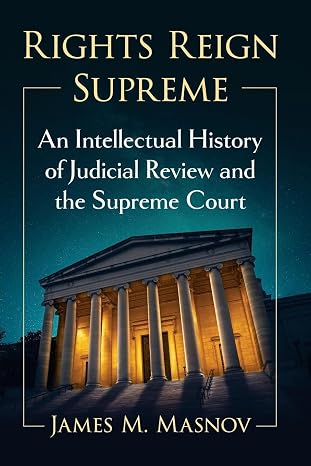
Rights Reign Supreme: An Intellectual History of Judicial Review and the Supreme Court
The Rule of Law
The Book of Judges: Perspectives from the Bench
Judicial Character in Hard Times: On the Role of Judicial Virtues in Defending the Rule of Law
Sentencing the Self-Convicted: The Ethics of Pleading Guilty
The Supreme Guide to Writing
Law of Judicial Precedent
Opinion Writing (3rd ed.)
The Authority of Law
Taking Rights Seriously
Thinking Like a Lawyer
Rehabilitating Criminal Justice: Innovations in Policing, Adjudication, and Sentencing
Legal Writing: A Judge’s Perspective on the Science and Rhetoric of the Written Word
The Elements of Legal Style (2nd ed.)
Free to Judge: The Power of Campaign Money in Judicial Elections
So Ordered: The Writer’s Guide for Aspiring Judges, Judicial Clerks, and Interns
The Federalist Papers
The Path of the Law
Judicial Recusal: Principles, Process and Problems
The Gift of Fear
Reading Law: The Interpretation of Legal Texts
Scalia Speaks: Reflections on Law, Faith, and Life Well Lived
Implicit Racial Bias across the Law
Over Ruled: The Human Toll of Too Much Law
The Great Dissenter: The Story of John Marshall Harlan, America’s Judicial Hero
Thinking, Fast and Slow
Blindspot: Hidden Biases of Good People
Judicial Reputation: A Comparative Theory
Sentencing without Guidelines
How Judges Think
Judicial Decision-Making: A Coursebook
Point Made: How to Write Like the Nation’s Top Advocates (2nd ed.)
Noise: A Flaw in Human Judgment
Biased: Uncovering the Hidden Prejudice That Shapes What We See, Think, and Do
Weapons of Math Destruction
The Supreme Court and the Attitudinal Model Revisited
Getting to Yes: Negotiating Agreement Without Giving In
Judging Statutes
Point Taken: How to Write Like the World’s Best Judges
Democracy and Distrust
Who Am I to Judge?: Judicial Craft versus Constitutional Theory
The Machinery of Criminal Justice
My Own Words
Disrobed: An Inside Look at the Life and Work of a Federal Trial Judge
Law’s Empire
Writing Deskbook for Administrative Judges: An Introduction
How Judges Decide Cases: Reading Writing
Listening to the Law: Reflections on the Court and Constitution
The Least Dangerous Branch
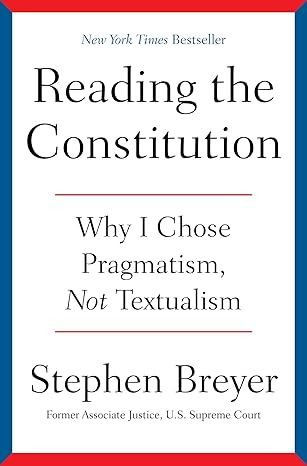
Reading the Constitution: Why I Chose Pragmatism, Not Textualism
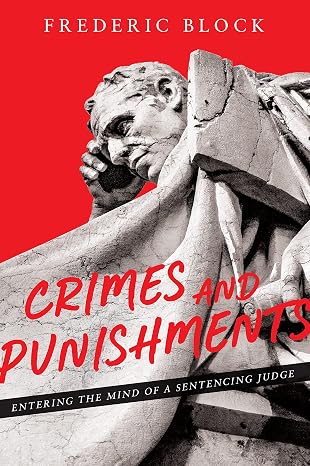
Crimes and Punishments: Entering the Mind of a Sentencing Judge
Race on the Brain: What Implicit Bias Gets Wrong About the Struggle for Racial Justice
The Judge in a Democracy
The Behavior of Federal Judges
A Judge’s Advice: 50 Years on the Bench
Making Your Case: The Art of Persuading Judges
The Nature of the Judicial Process
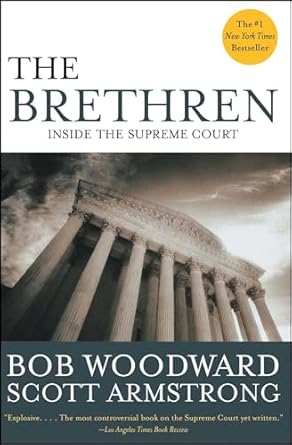
The Brethren: Inside the Supreme Court
An Introduction to Implicit Bias
The Death of Common Sense: How Law Is Suffocating America
Scroll to Top